


Nigeria at a glance
923,769 km² of savannah, rainforest, mangrove delta and megacity, shared by more than 230 million people who speak over 525 languages. Officially the Federal Republic of Nigeria

Nigeria is a country that feels too big to fit in one story — 923,769 km² of savannah, rainforest, mangrove delta and megacity, shared by more than 230 million people who speak over 525 languages. Officially the Federal Republic of Nigeria, it runs as a federal presidential republic with its capital in Abuja and its economic heartbeat in Lagos.
Nigeria at a glance
| Item | Detail |
| Population | 223,804,632 (2023 estimate), over 232.6 million cited in 2024 sources |
| Area | 923,769 km², 31st largest globally |
| Government | Federal presidential republic; President Bola Tinubu, Vice President Kashim Shettima |
| Independence | 1 October 1960 from the United Kingdom; republic since 1963 |
| GDP (2025) | $285.0bn nominal (52nd), $2.25trn PPP (19th) |
| GDP per capita | $1,200 nominal; $9,488 PPP |
| Main languages | English (official); Hausa, Igbo, Yoruba, Fulani recognized nationally |
Geography and people
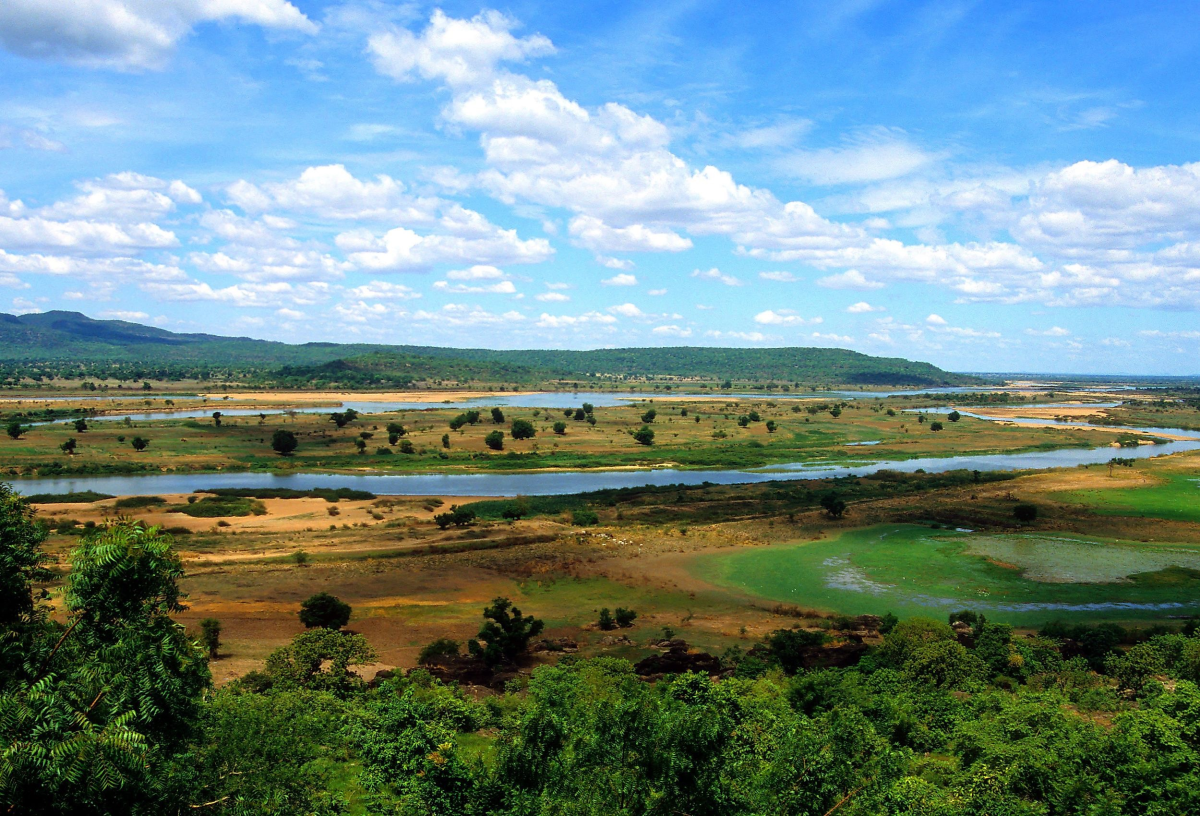
Nigeria sits on West Africa's Atlantic coast, bordered by Benin to the west, Niger to the north, Chad to the northeast and Cameroon to the east. Two great rivers define it: the Niger and the Benue meet at Lokoja and spill into the Niger Delta, one of the world's largest river deltas and home to Central African mangroves. The highest point is Chappal Waddi at 2,419 m in the eastern highlands.
You’re in Port Harcourt — listed at about 1.9 million people in recent city counts — right in that delta where oil infrastructure, creeks, and markets overlap. Lagos remains the giant with roughly 11.5 million, followed by Kano (∼3.5m), Ibadan (∼3.0m) and Abuja (∼2.2m).
Languages and ethnic mosaic
The 2018 breakdown still shapes conversation: about 30% Hausa, 15.5% Yoruba, 15.2% Igbo, 6% Fulani, plus Tiv, Kanuri, Ibibio, Ijaw and about a quarter identifying with smaller groups. English holds official business together, but Nigerian Pidgin moves faster in markets, and those 525+ mother tongues carry proverbs, praise songs, and legal traditions that predate the state.
Religion maps roughly north-south: “almost equal numbers of Muslims and Christians. Most of the Christians live in the south, and most of the Muslims live in the north”.
A brief history that still explains today
- Pre-colonial networks. Hausa city-states had literature like the Kano Chronicle; the Oyo Empire gave Yorubaland economic reach; Igbo village democracies, Benin bronzes, and Kanem-Bornu trade routes made the region globally connected long before 1900.
- Slave Coast to Lagos boom. European demand after 1700 turned coastal economies toward the transatlantic trade, then British anti-slavery patrols and missionary schools flipped the script. Lagos became a British colony in 1861 and, fueled by returned Saro and Aguda merchants, grew into a financial hub.
- Amalgamation. In 1914 Britain joined northern and southern protectorates as “Nigeria” — a name coined for administrative convenience, not cultural unity.
- Independence and war. Independence came 1 October 1960. Military rule followed, and the 1967-70 civil war — the Biafra secession — left deep memories of blockade and reconciliation.
- Return to democracy. The 1999 constitution restored civilian rule. Since then power has rotated between north and south, with the current administration led by President Bola Tinubu.
Government today
Thirty-six states plus the Federal Capital Territory, a bicameral National Assembly, and a strong presidency. Elections are fiercely competitive, courts are active, and civic pressure — from #EndSARS protests to labor unions — shapes policy as much as party manifestos.
Economy: oil, services, and creativity
Nigeria is Africa's fourth-biggest economy as of 2024 assessments, but the structure tells the real story:
- Services dominate at 55.92% of GDP, agriculture is 28.66%, industry 15.42% (2025).
- Oil still provides about two-thirds of government revenue, yet only about 9% of GDP.
- Growth is projected around 4.1% in 2026, 4.3% in 2027, after a 3.98% expansion in Q3 2025 driven by non-oil sectors.
- Inflation was 15.69% in April 2026; unemployment is estimated at 4.9% (2025).
- Poverty remains acute: 30.9% live on less than $2.15/day (2025). HDI is 0.560 (161st), and corruption perception sits at 26/100 (142nd).
Trade flows show the dependencies: exports hit $61.68bn in 2025 — crude, LNG, urea, cocoa — with top buyers Netherlands, India, Spain. Imports were $46.85bn, led by petrol, wheat, machinery, mostly from China (31.2%) and the US. Public debt is about 35% of GDP, with foreign reserves near $48.5bn in April 2026.
The quiet revolution is in culture. Nollywood and Afrobeats contributed N728.80 billion in Q1 2024 alone, up from N576.67bn a year earlier, after growing 152.79% over the previous decade. Netflix reported $23m invested over seven years, supporting 5,140 jobs. Spotify noted local music demand up 284% in 2023, and PwC projects the media sector as one of the world's fastest-growing.
Power remains the bottleneck — “an ongoing supply crisis in the power sector” persists despite being Africa's largest oil producer.
Culture that travels
- Music: From Fela Kuti's Afrobeat to today's Afrobeats stars — Wizkid, Burna Boy, Davido, Tems — the sound fuses highlife, juju, hip-hop and dancehall.
- Film: Nollywood is the world's second-largest film industry by output, and Nigeria's first TV station launched early in African broadcasting history.
- Literature: Wole Soyinka won the Nobel Prize in Literature, Chinua Achebe's "Things Fall Apart" reshaped global fiction, and Chimamanda Adichie continues that lineage.
- Food: Jollof rice rivalries, suya at roadside grills, egusi with pounded yam, akara and moi-moi — palm oil and chili giving depth.
Religion and everyday life
Faith is public and plural. Churches and mosques anchor neighborhoods, traditional festivals like Durbar, Eyo, and New Yam still draw crowds, and weddings — often with two ceremonies — are full productions. Football is the national glue: the Super Eagles have won three Africa Cup of Nations titles and Olympic gold in 1996.
Challenges and where the energy is
Security pressures — Boko Haram in the northeast, banditry in the northwest, separatist agitation in the southeast — sit alongside youth-led tech hubs in Yaba, Aba manufacturing clusters, and Port Harcourt's energy services. Two-thirds of Nigerians expect living conditions to improve in coming decades, a stubborn optimism that shows up in market hustle more than in statistics.
If you want, I can turn this into a printable briefing, a timeline poster, or a deep dive on one region — say, Rivers State's economy, or the evolution of Nigerian Pidgin literature.
Comments (1)