

The Journey of a Nation: Nigeria's Democracy Day
Democracy Day serves as both a celebration of resilience and an ongoing call to action for the preservation of citizen rights.
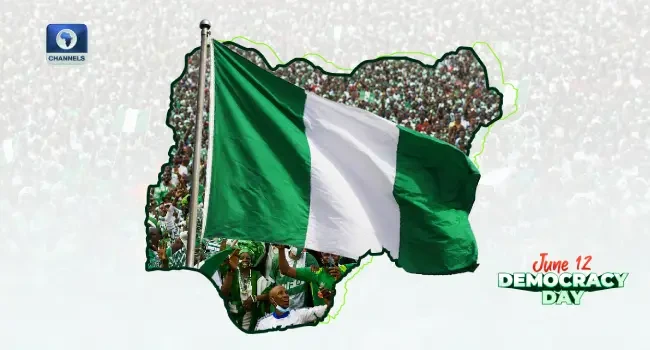
Democracy Day is a poignant reminder of Nigeria's enduring quest for self-determination, civil liberties, and the rule of law. Celebrated annually on June 12, this national public holiday does more than grant citizens a day of rest; it stands as a testament to the heavy price paid for the restoration of civilian governance.
For decades, the nation fluctuated between short-lived republics and protracted military regimes. Today, marking nearly three decades of unbroken democratic rule since 1999, Democracy Day serves as both a celebration of resilience and an ongoing call to action for the preservation of citizen rights.
The Genesis: The Historic Election of June 12, 1993
To understand why Democracy Day is celebrated on June 12, one must look back to the watershed event of 1993. Following years of military dictatorship under General Ibrahim Babangida, the regime promised a transition back to democratic rule.
The presidential election held on June 12, 1993, pitted Chief Moshood Kashimawo Olawale (MKO) Abiola of the Social Democratic Party (SDP) against Bashir Tofa of the National Republican Convention (NRC).
What followed was unprecedented in Nigerian history:
- Overcoming Ethno-Religious Barriers: Despite running on a Muslim-Muslim ticket with Ambassador Baba Gana Kingibe, MKO Abiola won majorities across diverse geopolitical zones, breaking traditional ethnic and religious voting fault lines.
- The Safest and Freest Vote: International and local observers widely acclaimed the election as the freest, fairest, and most peaceful the country had ever witnessed.
- The Option A4 System: The open ballot system utilized during this poll minimized structural rigging, reflecting the transparent intent of the electorate.
The Ultimate Sacrifice: The Annulment and Its Aftermath
The collective hope of millions was abruptly crushed when General Babangida's military junta annulled the election before the official results could be fully announced. The reason given was a vague threat to national security, but the move was largely recognized as an elite conspiracy to cling to power.
The annulment triggered historical unrest, strikes, and international condemnation. In 1994, Abiola courageously declared himself the rightful president of Nigeria at the Epetedo area of Lagos. He was promptly arrested by the subsequent dictatorial regime of General Sani Abacha and charged with treason.
"The sacrifices they made, and the precious gift brought about by their selfless devotion can never be repaid. Neither shall it be forgotten." — Presidential Broadcast excerpt honoring pro-democracy martyrs.
Abiola remained incarcerated under harsh conditions for four years, refusing to trade his democratic mandate for personal freedom. He died in detention under mysterious circumstances on July 7, 1998, just days before he was scheduled to be released. His wife, Kudirat Abiola, was also brutally assassinated in 1996 while actively campaigning in the trenches for his release and the restoration of democracy.
Chronology of Nigeria’s Democratic Evolution
The road to the Fourth Republic was paved with political instability and a relentless struggle against autocracy. The timeline below illustrates the critical milestones that shaped Nigeria’s modern political landscape.
- Independence and Early Chaos
1960 – 1966
Nigeria gains independence from Great Britain on October 1, 1960. The First Republic is established but quickly crumbles under ethnic tensions, culminating in the first military coup on January 15, 1966. - The Seesaw of Republics
1979 – 1983
After a brutal civil war and continuous military juntas, power shifts to a civilian government under President Shehu Shagari (The Second Republic), only to be truncated by another military coup led by Major General Muhammadu Buhari in late 1983. - The June 12 Catalyst
1993
The historic June 12 presidential election is won by Chief MKO Abiola but unjustly annulled by General Ibrahim Babangida, driving the nation into deep civil unrest and prolonged military dictatorship under General Sani Abacha. - The Dawn of the Fourth Republic
1999
Following the sudden deaths of General Abacha and Chief MKO Abiola in 1998, General Abdulsalami Abubakar oversees a transition process. On May 29, 1999, retired General Olusegun Obasanjo is sworn in as a civilian president, marking the start of Nigeria's longest uninterrupted democratic era. - Shifting the Date for Historical Justice
2018
President Muhammadu Buhari officially moves Democracy Day from May 29 to June 12, correcting historical omissions and posthumously conferring the nation's highest honor (GCFR) upon Chief MKO Abiola.
The Great Shift: From May 29 to June 12
For nearly two decades (2000 to 2018), Nigeria celebrated Democracy Day on May 29, because it marked the specific calendar day in 1999 when the military handed over executive authority to civilian leaders.
However, many activists, historians, and civil society groups argued that May 29 merely celebrated a handover by the military rather than the true spirit of popular sovereignty. They maintained that June 12 was the authentic day when Nigerians genuinely expressed their collective democratic will.
In June 2018, the federal government corrected this narrative alignment:
| Feature | Former System (May 29) | Current System (June 12) |
|---|---|---|
| Primary Focus | The day the military handed over power in 1999. | The day Nigerians united at the ballot box in 1993. |
| Philosophical Underpinning | Bureaucratic transition of administrative authority. | Active civilian struggle, sacrifice, and citizen agency. |
| National Honors | Standard political celebrations. | Posthumous awards given to democratic champions (e.g., MKO Abiola, Kudirat Abiola, Gani Fawehinmi). |
Moving the date served to validate the historical truth that Nigeria's democracy was earned through civic resistance, media bravery, and ultimate human sacrifice, rather than as a benevolent gift from a military junta.
Contemporary Triumphs and Pressing Hurdles
Today, Nigeria enjoys its longest unbroken stretch of civilian administration. Significant triumphs have been achieved, including the peaceful transfer of executive power between opposing political parties (as seen in 2015) and continuous institutional overhauls. Major developments such as the Not Too Young To Run law have structurally opened up paths for younger individuals to run for public office, while technological adoptions like the Bimodal Voter Accreditation System (BVAS) seek to protect ballot integrity.
Nevertheless, democracy remains an ongoing experiment rather than a static destination. The nation still wrestles with complex systemic vulnerabilities:
- Electoral Quality: Issues such as vote-buying, voter intimidation, and logistical hitches continue to affect overall turnout and distort voter autonomy.
- Economic Autonomy: Pervasive inflation, high cost of living, and poverty can directly undermine civic choices, as economic survival sometimes overrides ideological voting.
- National Security: Persistent threats from localized banditry, insurgencies, and communal clashes disrupt normal administrative functions and strain civic spaces.
Democracy Day acts as a vital yearly mirror. It asks citizens and elected officials alike to evaluate whether they are delivering the tangible benefits of social justice, infrastructure, and economic freedom promised by the martyrs of June 12.









Comments (0)